

Choosing reliable Screen Printing Ink Manufacturers is a practical decision for global buyers, not a simple price comparison. Ink affects color accuracy, adhesion, curing time, fabric feel, wash resistance, and production speed. A supplier may look impressive online. The real test happens beside the press.
Rick Roth, a veteran screen-printing educator and industry consultant, offers a useful reminder: “Ink choice follows the job, not the other way around.” Buyers should match ink chemistry with substrates, equipment, climate, and printing volume. Cotton, polyester, glass, paper, and coated metals can require very different solutions. A vivid red on a showroom sample proves little. Ask for technical data sheets, safety information, recommended curing temperatures, batch details, and physical samples. Then run a controlled wash and adhesion test.
This guide examines leading Screen Printing Ink Manufacturers serving international markets. It considers product consistency, technical support, color systems, packaging, export experience, and responsible manufacturing practices. Reliable documentation matters. So does responsive communication across time zones.
No supplier is perfect. Even strong manufacturers may struggle with minimum order quantities, regional availability, or occasional color variation. That deserves honest attention. Buyers should compare actual production needs rather than trust polished claims. A supplier that answers difficult questions clearly is often more valuable than one offering the lowest quotation. Small details matter: a sealed container, a readable batch code, and ink that still performs after repeated washing.
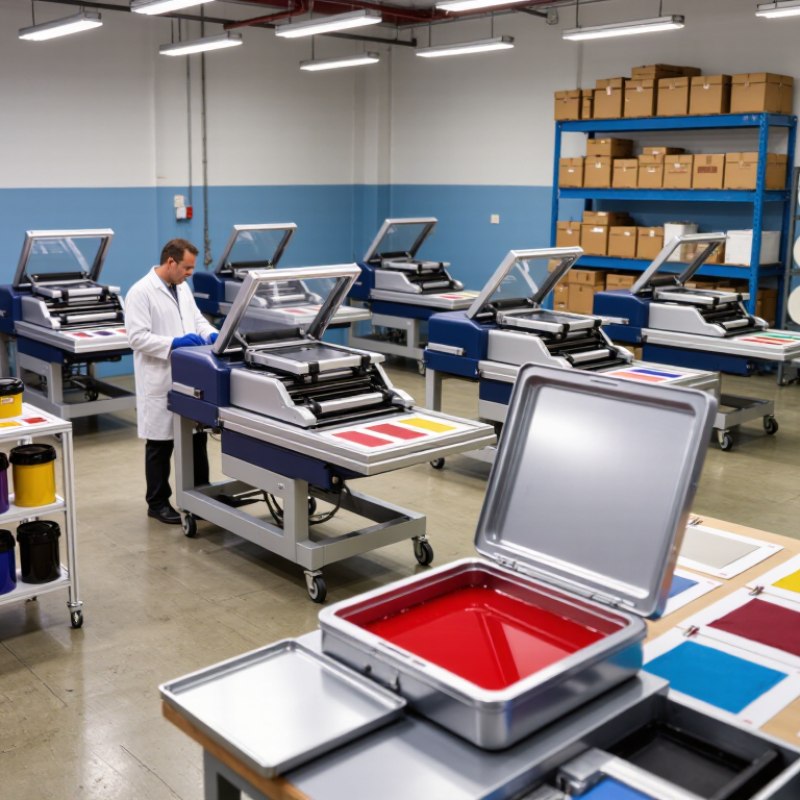
Screen printing ink is a coating material pushed through a prepared mesh onto a surface. A squeegee controls pressure, deposit thickness, and edge definition. Unlike ordinary liquid paint, the ink must release cleanly through open mesh areas. It must also remain stable during production. That balance can be difficult.
The main classifications are based on chemistry and curing method. Water-based inks use water as their primary carrier and often produce a soft hand on textiles. Plastisol inks contain resin particles suspended in plasticizer and require heat to form a durable film. Solvent-based inks dry as solvents evaporate, while ultraviolet-curable inks harden under UV energy. There are also silicone, epoxy, and specialty conductive systems for demanding surfaces. These categories overlap in real factories.
According to Grand View Research’s 2024 printing inks analysis, the global printing inks market was valued at about US$21 billion in 2023. Smithers’ industry forecasts also identify packaging and functional printing as important growth areas. These figures include several printing processes, not only screen printing, so buyers should avoid treating them as exact screen-ink sales. Classification alone cannot select an ink. A technician should check mesh count, substrate energy, ink viscosity, drying temperature, and final-use requirements. On a test print, a dark cotton shirt may show strong coverage but a rough handle. A glass sample may look sharp, yet fail adhesion after cleaning. Small trials expose these weaknesses. My view is simple: product data sheets guide decisions, but controlled testing earns confidence.

Global buyers should evaluate screen printing ink manufacturers beyond polished catalogs and low quotations. Request technical data sheets, safety documents, batch records, and current production samples. Check whether the factory can explain pigment stability, curing conditions, and substrate compatibility in practical terms. A short video audit can reveal storage conditions, mixing procedures, and cleanliness. Test the ink.
Consistency deserves close attention. Compare viscosity, color strength, adhesion, drying speed, and wash resistance across several batches. Ask for test methods, acceptable tolerances, and retained-sample policies. Experienced manufacturers usually discuss failure risks openly, including blocked screens, poor coverage, or migration on flexible fabrics. That honesty matters. However, technical explanations should match measurable results, not just confident language. Independent testing remains useful when specifications seem unusually optimistic.
Global supply also depends on documentation and service. Verify destination-specific compliance documents through qualified professionals, because requirements can differ by market and application. Review lead times, minimum order quantities, packaging protection, and temperature-controlled shipping options. Traceable lot numbers make complaints easier to investigate. A strong supplier should provide clear troubleshooting support after delivery, not disappear after payment. No evaluation is flawless. A sample may perform well in a warm workshop but fail during humid transport or high-speed production. Run a controlled trial, retain printed samples, and record actual production conditions before approving regular orders.
Leading manufacturers now compete through specialization, not simply broad catalogues. Market research from Grand View Research estimated the global screen printing inks market at about USD 3.3 billion in 2023. Its forecast also indicates steady growth through 2030. However, market definitions vary between reports, so buyers should verify figures carefully. That small detail matters.
One manufacturer profile may focus on water-based inks for cotton apparel. These formulations offer a softer hand feel and lower solvent content, but they require controlled drying and careful storage. Another supplier may specialize in UV-curable inks for plastics, labels, and industrial panels. These inks cure quickly under ultraviolet lamps and can improve production speed. Their performance depends on lamp intensity, substrate energy, and film thickness. Silicone-focused producers serve stretch fabrics, where elasticity and wash resistance are critical. Conductive ink specialists target printed electronics, using silver, carbon, or copper-based systems for functional circuits.
The Smithers report, The Future of Screen Printing Inks to 2028, identifies packaging, textiles, and industrial applications as important demand areas. Product data sheets should therefore include viscosity ranges, curing temperatures, adhesion results, and wash-test conditions. Independent testing adds credibility. Ask for batch certificates and migration data when food-contact packaging is involved. Supplier claims can sound polished. They are not always complete. I would also compare real press trials, because laboratory results may not reflect humidity, mesh count, or operator technique. Reliable manufacturers explain limitations, not only advantages.
Top Screen Printing Ink Manufacturers for Global Buyers
Regional supply matters when buyers compare screen printing ink manufacturers. East and Southeast Asia offer broad production capacity and competitive batch pricing. Europe is strong in technical formulations, documentation, and specialty applications. North America often provides responsive support for short runs and customized color matching. These patterns are not absolute. Freight, energy costs, and port congestion can quickly change the best option.
Grand View Research valued the global printing inks market at about USD 20.63 billion in 2022. Its forecast indicates a compound annual growth rate near 2.7% through 2030. Smithers also identifies packaging, labels, and industrial decoration as important print demand areas. For global buyers, this suggests checking more than unit price. A 20-kilogram pail may look economical, but long transit times can increase inventory pressure. Sometimes, the cheaper offer is not cheaper.
Export coverage should include clear commercial invoices, safety data sheets, certificates of analysis, and batch traceability. Ask whether the supplier supports export documentation and destination-specific labeling. Reliable technical teams can review mesh count, curing conditions, substrate type, and color tolerance before production. Requesting a small trial batch is practical. It exposes adhesion problems early. Buyer support still varies widely, even among experienced suppliers. Response time, replacement procedures, and multilingual communication deserve written confirmation. UN Comtrade data under HS 3215 can help compare national ink-trade flows, although the code covers several ink categories and needs careful interpretation.
| Manufacturing Region | Established Supply Strength | Common Ink Categories | Typical Applications | Common Export Coverage | Typical Buyer Support | Important Compliance Considerations |
|---|---|---|---|---|---|---|
| East Asia | Large-scale production, broad product portfolios, competitive manufacturing costs, and established container-port logistics. | Water-based, plastisol, solvent-based, UV-curable, silicone, discharge, and specialty functional inks. | Apparel, electronics, industrial components, packaging, promotional products, and labels. | Asia-Pacific, Europe, North America, Latin America, the Middle East, and Africa. | Color matching, laboratory samples, technical data sheets, production trials, private-label packaging, and multilingual order coordination. | Confirm restricted-substance requirements, product safety documentation, transport classification, and destination-market chemical rules. |
| South Asia | Strong textile-printing ecosystem with flexible batch sizes and extensive experience in garment-decoration applications. | Water-based textile inks, plastisol, discharge, pigment concentrates, puff, metallic, and specialty-effect inks. | T-shirts, sportswear, home textiles, fashion garments, bags, and promotional textiles. | South and Southeast Asia, Europe, North America, the Middle East, and selected African markets. | Screen-making guidance, curing recommendations, shade development, sample approval, and support for textile testing. | For apparel exports, buyers commonly request restricted-substance declarations, colorfastness information, and textile-standard documentation. |
| Western Europe | High emphasis on formulation control, specialty chemistry, sustainability, and technically demanding industrial applications. | UV-curable, water-based, low-migration, solvent-based, conductive, ceramic, and high-performance industrial inks. | Packaging, glass, automotive components, electronics, industrial graphics, labels, and premium textiles. | European Union, the United Kingdom, North America, Asia-Pacific, and other regulated markets. | Application engineering, press-side troubleshooting, migration testing support, sustainability documentation, and qualification assistance. | Buyers should review safety data sheets, technical data sheets, REACH-related obligations, packaging-contact requirements, and local waste rules. |
| North America | Mature supply base focused on textile decoration, industrial graphics, packaging, and customized technical formulations. | Plastisol, water-based, UV-curable, solvent-based, silicone, specialty-effect, and industrial screen-printing inks. | Apparel, sports merchandise, signage, electronics, automotive parts, containers, and industrial nameplates. | United States, Canada, Latin America, Europe, and Asia-Pacific through distributors and direct export channels. | On-site technical service, compliance declarations, ink-system recommendations, curing audits, and distributor training. | Check applicable federal and state chemical regulations, workplace labeling, VOC requirements, and end-use product restrictions. |
| Japan and South Korea | Precision-oriented production with strong capabilities in electronics, functional coatings, packaging, and high-consistency formulations. | Conductive, UV-curable, solvent-based, insulating, ceramic, glass, photo-process, and fine-line specialty inks. | Printed electronics, displays, automotive components, packaging, glass, labels, and precision industrial parts. | East and Southeast Asia, Europe, North America, and other advanced manufacturing markets. | Detailed process specifications, laboratory validation, substrate testing, technical training, and controlled color-management support. | Request batch traceability, performance test methods, electrical or chemical specifications, and end-use qualification data where applicable. |
| Southern Europe | Well-developed specialist production for packaging, ceramics, glass, textiles, and decorative industrial printing. | Ceramic, glass, UV-curable, water-based, solvent-based, textile, and decorative-effect inks. | Tiles, bottles, glassware, fashion textiles, labels, packaging, and decorative surfaces. | European Union, North Africa, the Middle East, North America, and selected Asian markets. | Substrate trials, firing or curing guidance, color formulation, packaging consultation, and distributor-based technical support. | Confirm food-contact or consumer-product suitability, safety documentation, heavy-metal limits, and regional environmental requirements. |
| Türkiye and Eastern Europe | Convenient regional supply for textile, packaging, promotional-product, and general industrial printing markets. | Water-based, plastisol, solvent-based, UV-curable, pigment, metallic, and specialty textile inks. | Garments, home textiles, flexible packaging, labels, promotional goods, and industrial graphics. | Europe, the Balkans, Central Asia, the Middle East, North Africa, and nearby export markets. | Small-to-medium order support, shade matching, technical sampling, screen-process recommendations, and regional logistics coordination. | Review destination-market chemical restrictions, textile buyer codes, safety data sheets, and customs classification before shipment. |
| Latin America | Regional production and distribution focused on textile decoration, packaging, signage, and general-purpose printing needs. | Water-based, plastisol, solvent-based, UV-curable, pigment, and promotional-product inks. | Apparel, promotional products, flexible packaging, labels, signage, and printed consumer goods. | Latin America, North America, selected European markets, and intra-regional destinations. | Distributor inventory, Spanish- or Portuguese-language support, sample dispatch, application advice, and basic process troubleshooting. | Verify local labeling, import documentation, VOC controls, textile chemical requirements, and country-specific registration rules. |
Selecting a screen printing ink manufacturer requires more than comparing prices.
Grand View Research estimates the global printing inks market will grow steadily through 2030, driven partly by packaging and specialty applications. This growth increases supplier choices, but also raises quality risks. Buyers should request technical data sheets, safety data sheets, certificates of analysis, and batch traceability before placing large orders.
Test the ink on your actual substrate. Not a showroom sample. Measure viscosity, curing time, adhesion, color strength, abrasion resistance, and storage stability under production conditions.
For food-related packaging, review migration testing and applicable compliance documents with a qualified specialist. ISO’s 2023 Survey reported more than 1.2 million ISO 9001 certificates worldwide, yet certification alone cannot prove printing performance. Audit the factory, inspect laboratory equipment, and ask how rejected batches are controlled.
Supply reliability matters just as much.
Smithers’ global printing industry forecasts continue to identify packaging and customized printing as important growth areas, making stable lead times increasingly valuable. Ask manufacturers for historical delivery performance, minimum order quantities, emergency procedures, and sample retention policies. A supplier may offer impressive color matching but provide weak technical support. That gap becomes expensive during a press stoppage.
The cheapest quote still attracts attention. Sometimes, unfairly. I would score quality consistency, documentation, communication, and total conversion cost before approving any manufacturer.